Panel Lift Garage Doors - Top 5 Reasons they are Popular for Australian Homes
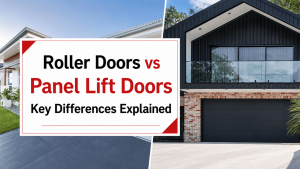
Most homeowners choosing between a roller door and a panel lift door start with looks, then get talked out of that decision the moment headroom or budget comes into it. It’s worth working through the actual reasons panel lift doors suit so many Australian homes before you land on either option, rather than picking on style alone and hoping the practical details fall into place.
We install panel lift and sectional doors from four brands, Gliderol, Signature, B&D and Danmar, and we see the same handful of reasons come up again and again when a Central Coast homeowner ends up choosing panel lift over roller. Here are the five that matter most.
1. They handle low headroom better than most people expect
A roller door needs somewhere for the curtain to bundle above the opening: around 400mm for a Gliderol Series A, 450mm for Series AA. That’s fine on a modern build, but plenty of Central Coast homes were built before garages were designed with automation in mind, and the space above the opening is tighter than the homeowner assumes until it’s actually measured.
Panel lift doors distribute their clearance differently. Rather than concentrating it in a barrel above the opening, the hardware runs back along the horizontal tracks into the roof space. That makes panel lift a genuinely practical fix in garages where a beam, a light fitting or ducting sits close to the ceiling and a roller door’s barrel simply can’t work around it. If you’re not sure which category your garage falls into, it’s worth having the headroom checked before you commit to a style rather than after the door has already been ordered.
2. They're quieter in daily use
Panel lift doors are generally the quieter of the two door types. The spring-balanced track system distributes load evenly across the panel as it travels, so there’s none of the coiling noise a roller barrel produces as the slats wind in. For a garage that shares a wall with a bedroom, or sits close to a neighbour’s fence line, that difference is noticeable every single time the door opens.
3. The finish range goes well beyond a single Colorbond sheet
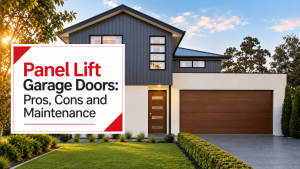
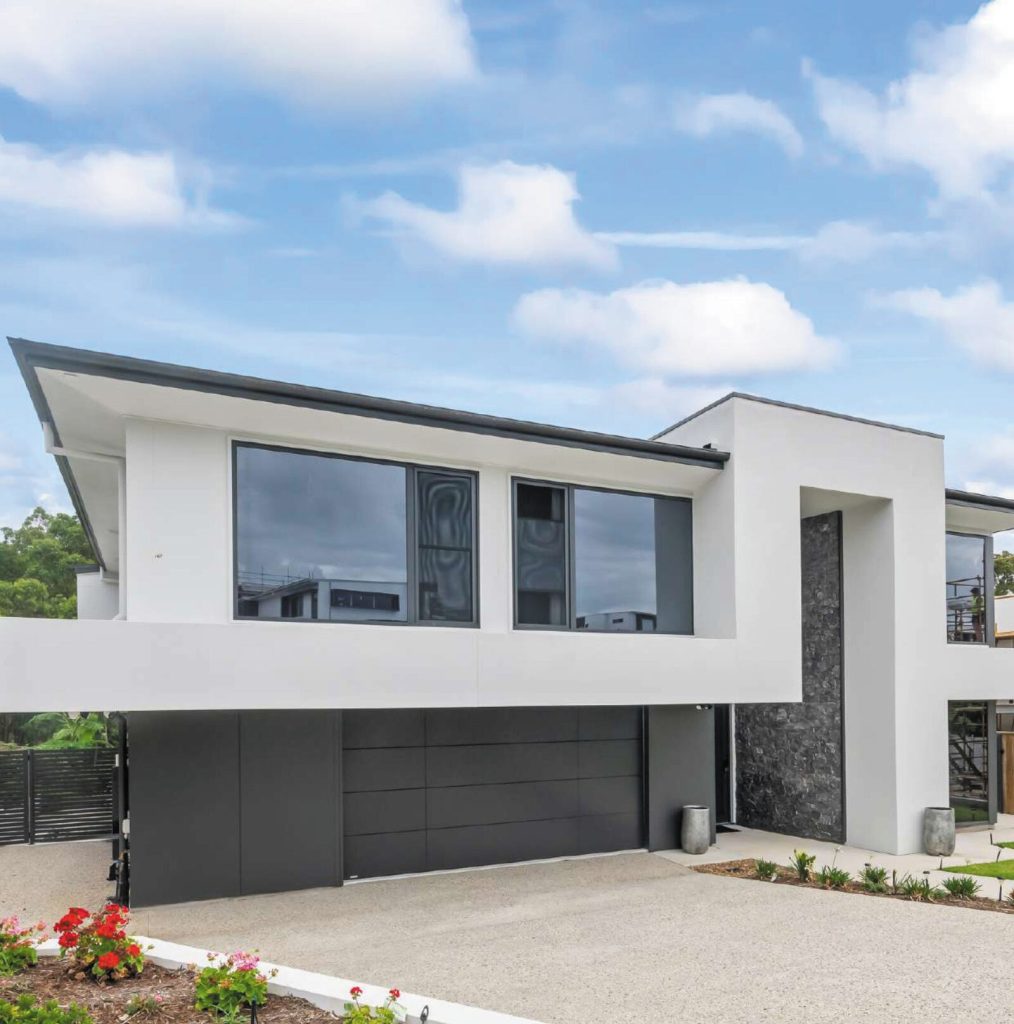
A roller door is, by design, one continuous curtain. A panel lift door is built from individual hinged panels, and that construction opens up a much wider range of looks. Gliderol’s Panel•Glide runs a straightforward Colorbond finish across four design choices. B&D’s Panelift is one of the most widely recognised panel lift doors in Australia, with a broad colour and style range built on a proven torsion spring system. Signature and Danmar both sit at the custom end, offering timber-look, barn, herringbone and other architectural finishes for homeowners who want the door to match a specific style rather than pick from a standard palette.
If the garage door is one of the largest visible surfaces on the front of the house, and on most Central Coast homes it is, that range of finish options genuinely changes what’s possible for kerb appeal.
4. They suit homes with more depth than height
Backroom matters as much as headroom with a panel lift door. As a working example, B&D’s Panelift installation specifications call for backroom equal to the door height plus 350mm, so the horizontal tracks have somewhere to run. For a garage with a low roofline but reasonable depth behind it, that trade-off usually works in the panel lift door’s favour. A roller door tends to make more sense the other way around, where height is available but depth is limited.
This is exactly the kind of detail that’s easy to overlook from a photo or a showroom display, and exactly the kind of thing worth talking through with whoever’s measuring your garage.
5. There's a brand and budget fit for most situations
Because panel lift covers four separate brands at Affordable Openings, there’s more room to match the door to the budget and the home rather than starting from a single product and working backwards. Gliderol’s Panel•Glide gives a strong, straightforward option as the exclusive regional Gliderol supplier, a brand we know inside out. B&D’s Panelift sits as the recognisable mainstream choice. Signature and Danmar exist for homeowners who want a custom look and are prepared to pay for it.
That range means the decision usually comes down to what the home actually needs, rather than what’s on the showroom floor that week.
Getting the headroom checked before you decide
The single biggest factor in whether a panel lift door will work for your garage is headroom and backroom, not style preference. It’s worth having this measured properly before you commit, particularly on an older Central Coast home where the roofline wasn’t designed with a specific door type in mind. If you’d like a straightforward opinion on which door type suits your garage, get in touch with our team or have a look at our panel and sectional door range.
Frequently Asked Questions
It depends on the brand and finish rather than the door type itself. A standard Colorbond panel lift door and a standard Colorbond roller door sit in a similar range; the price gap widens once you move into custom finishes like Signature or Danmar's timber-look ranges.
No, generally less. Roller doors need clearance concentrated above the opening for the barrel. Panel lift doors need that clearance spread along the horizontal tracks instead, which is why they often suit garages with a beam or light fitting close to the ceiling.
Yes. All four brands we supply, Gliderol, B&D, Signature and Danmar, can be fitted with an automatic opener as part of a new install or retrofitted to an existing manual door.
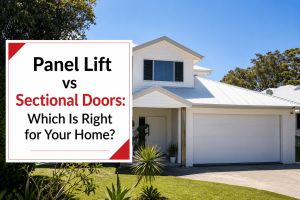
For a comparison of how panel lift and roller doors stack up against each other in more detail, see our guide on roller doors vs panel lift doors. For the mechanics of how a panel lift door actually works, read what is a panel lift garage door.