Pros, Cons and Maintenance with Panel Doors
A panel lift garage door is one of the most popular choices for Central Coast homes, and for good reason. But no door type is right for every garage, and a fair look at panel lift doors means being upfront about where they fall short as well as where they excel. This isn’t a troubleshooting guide for a door that’s already playing up; if that’s where you’re at, our post on common panel lift door problems covers that ground. This one is for anyone still deciding whether a panel lift door is the right fit, and for anyone who already has one and wants to keep it running well for longer.
The genuine advantages of Panel Lift Doors
They’re quiet. The spring-balanced track mechanism distributes load evenly as the door travels, so there’s none of the mechanical noise a roller door’s barrel produces as it winds. For a garage attached to a bedroom or living space, that difference is felt every day, not just noticed once.
They handle awkward headroom well. Because the clearance requirement runs along the horizontal tracks rather than concentrating above the opening, panel lift doors often work in garages where a roller door’s barrel simply won’t fit around a beam, light fitting or ducting.
The finish range is broad. Between Gliderol, B&D, Signature and Danmar, panel lift covers everything from a straightforward Colorbond sheet through to custom timber-look, barn and herringbone finishes. Few other garage door types offer that spread of options within one construction style.
They’re a mature, well-proven system. Torsion spring balanced doors have been the mainstream panel lift standard for decades, and every major brand we install, Gliderol, B&D, Signature and Danmar, builds to it. That maturity shows up in parts availability and in how predictable the system is to service.
Where they fall short
They need more backroom. B&D’s own Panelift specifications call for backroom equal to the door height plus 350mm so the horizontal tracks have somewhere to run. In a shallow garage, that space simply isn’t there, and a roller door becomes the more realistic option.
The moving parts are more complex. A panel lift door has hinged panels, rollers, tracks and a torsion spring system working together. More components generally means more that can eventually need attention, compared with a roller door’s simpler single-curtain design.
The torsion spring is genuinely dangerous to touch. This is the one point worth being blunt about. A torsion spring is wound under enough tension to lift a door that can weigh well over a hundred kilograms, and adjusting or replacing one without the right tools and training is a serious injury risk. This isn’t a DIY job, and it isn’t one where a YouTube video substitutes for the winding bars and sequence a trained installer actually uses.
Coastal conditions test the hardware. Salt air on the Central Coast corrodes exposed metal components faster than the same hardware would wear inland, and a panel lift door’s hinges, rollers and brackets are more exposed than a roller door’s enclosed barrel. It’s not a reason to avoid panel lift doors, but it is a reason to take maintenance seriously if you live anywhere near the coast.
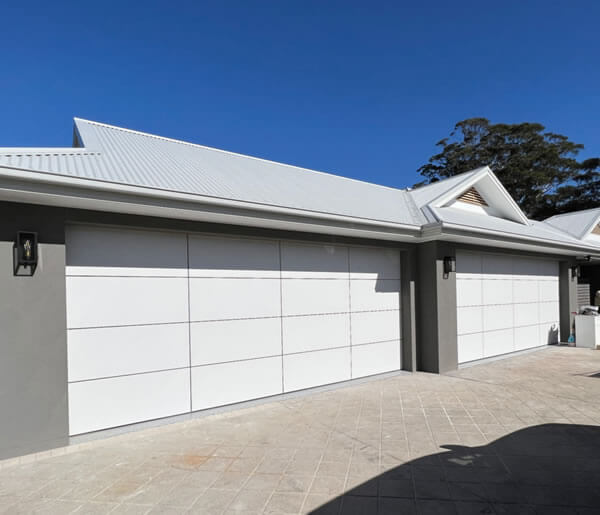
Maintenance that actually extends the life of the Panel door
The honest version of garage door maintenance for a Central Coast home isn’t complicated, but it does need to happen on a schedule rather than only when something starts making noise.
Lubricate the moving parts twice a year. Hinges, rollers and the track itself all benefit from a proper garage door lubricant applied regularly, not WD-40, which displaces moisture short term but doesn’t lubricate well long term. Twice a year is a reasonable minimum on the coast; homes right on the waterfront may want to do it more often.
Check for early signs of salt air corrosion. Stiff rollers, hinges that have started to discolour, or hardware that’s noticeably harder to move than it used to be are all early indicators. Catching this early is far cheaper than replacing a seized or badly corroded component later.
Watch the balance, don’t test it yourself with the spring engaged. A correctly balanced panel lift door should stay roughly where it’s left when lifted by hand with the automatic opener disconnected. If it drops or rises on its own, the spring tension needs adjusting, and that’s a job for a trained technician, not something to push through with a stronger motor setting.
Keep an eye on panel condition. A single bent or rusted panel doesn’t just look untidy; it can throw off how the rest of the door tracks and put extra strain on the opener. If you notice damage forming, it’s worth having it looked at before it affects how the whole door operates.
Get a professional service on a schedule, not just when something breaks. Most of what shortens a panel lift door’s working life happens gradually and is entirely preventable with a proper inspection. A routine service catches wear on springs, cables, tracks and rollers well before any of it becomes an on-the-spot repair.
If any of the above sounds like it’s already an issue on your door rather than a maintenance reminder, that’s worth a call rather than a DIY attempt given how much tension is involved in the spring system. You can book a service or repair with our team, or get in touch if you’re still weighing up whether panel lift is the right door type for your home.
Frequently Asked Questions
The backroom requirement. A panel lift door needs the door height plus roughly 350mm of clear space behind the opening for the horizontal tracks, which rules it out for some shallower garages.
As a general guide, an annual professional service is a sensible minimum, with lubrication of moving parts done roughly twice a year. Coastal properties exposed to salt air may benefit from more frequent checks.
Not dramatically more, but the hardware is more exposed. Hinges, rollers and brackets sit outside the door structure rather than enclosed in a barrel, so they're worth checking a little more often in a salt air environment.
For the mechanics of how a panel lift door works day to day, see what is a panel lift garage door. If your door is already showing a specific problem, our guide to common panel lift door problems covers diagnosis and next steps.